Before the Break: How Machine Learning Is Rewriting the Rules of Aircraft Maintenance
When the Warning Light Is Already Too Late
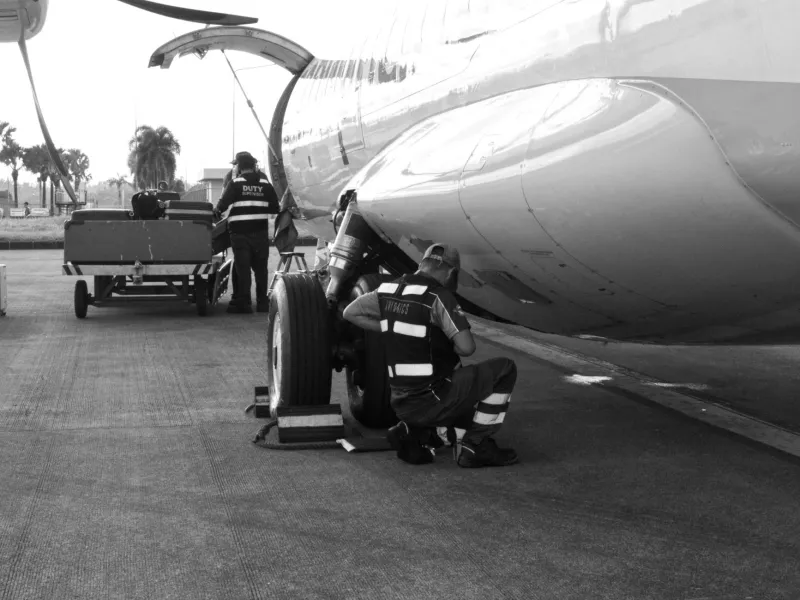
For most of commercial aviation's history, maintenance has operated on a straightforward — if imperfect — premise: inspect on a schedule, replace at defined intervals, and respond to failures as they emerge. It is a system that has served the industry reasonably well, but one that carries an inherent inefficiency. Scheduled maintenance pulls airframes out of service whether or not they need attention, while unexpected failures can ground aircraft at the worst possible moments, stranding passengers and triggering costly unscheduled repairs.
The emergence of AI-powered predictive maintenance is challenging that paradigm at its foundation. Rather than waiting for a sensor alarm or a technician's trained eye, modern machine learning systems analyze continuous streams of operational data — vibration signatures, thermal gradients, pressure fluctuations, acoustic emissions — and identify anomalies that no human inspector could detect in real time. The goal is not simply to react faster. It is to intervene before a failure has any meaningful chance of occurring.
"We're not looking for the moment something breaks," said one senior maintenance director at a major US carrier, speaking on background due to competitive sensitivities. "We're looking for the moment the data starts telling a different story than it told last week. That's where the value is."
Sensor Networks and the Data Deluge
Modern commercial aircraft are already instrumented to a remarkable degree. A single wide-body jetliner can generate upward of half a terabyte of data per flight, drawn from thousands of sensors embedded across engines, hydraulic systems, avionics, and structural components. For decades, much of that data was either discarded or reviewed only in the aftermath of an incident. Today, it is the raw material for an entirely new class of maintenance intelligence.
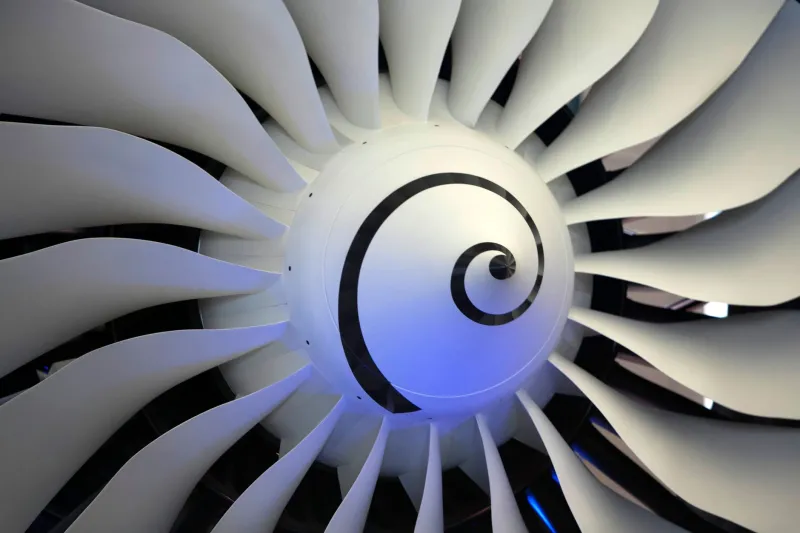
Machine learning models — particularly those built on recurrent neural networks and anomaly detection architectures — are trained on historical failure data to recognize the subtle precursor signatures that precede component degradation. Engine bearing wear, for instance, produces characteristic changes in vibration frequency that may appear months before mechanical failure. Hydraulic seals approaching the end of their service life alter fluid pressure dynamics in ways that are nearly imperceptible to standard threshold-based monitoring but highly legible to a well-trained algorithm.
Companies including Honeywell, GE Aerospace, and Prognos AI have developed platforms specifically designed to process this sensor telemetry at scale, feeding maintenance crews actionable alerts rather than raw data streams. The distinction matters enormously in practice. A technician presented with a terabyte of unlabeled sensor readings cannot act on it. A technician presented with a prioritized alert stating that a specific engine bleed valve is exhibiting degradation consistent with failure within the next 200 flight hours can plan accordingly.
The Military's High-Stakes Laboratory
While commercial aviation has significant financial incentives to reduce unscheduled maintenance, the US military has pursued predictive maintenance with particular urgency — and for reasons that extend well beyond cost. In operational contexts, an unexpected aircraft failure is not merely an inconvenience. It can be a mission-critical event.
The US Air Force has been among the most aggressive adopters of AI-driven maintenance tools, integrating predictive analytics into programs covering the F-35, C-17, and various rotary-wing platforms. The Air Force Research Laboratory's work on Condition-Based Maintenance Plus (CBM+) has provided a structural framework for embedding sensor-driven prognostics into maintenance doctrine, reducing reliance on fixed time-based replacement schedules in favor of actual condition monitoring.
Engineers working within those programs describe a cultural shift as significant as the technological one. "The hardest part isn't the algorithm," noted one aerospace engineer with experience in military sustainment programs. "The hardest part is getting experienced maintainers to trust a system that tells them something is wrong when the aircraft looks and sounds fine to them. That trust takes time to build, and it has to be earned through demonstrated accuracy."
Legacy Fleets and the Integration Problem
For all its promise, predictive maintenance technology confronts a significant structural challenge: the aircraft that need it most are often the least equipped to support it. Legacy platforms — whether aging commercial narrowbodies still generating revenue for regional carriers or decades-old military transports — were not designed with continuous sensor telemetry in mind. Retrofitting them with the sensor density required for high-fidelity predictive analytics is neither simple nor inexpensive.
Several companies have developed retrofit sensor packages specifically targeting this gap, using wireless sensor nodes and edge computing hardware that can be installed without extensive airframe modification. The data quality achievable through retrofit systems is generally lower than what purpose-built architectures provide, but even partial sensor coverage can meaningfully improve maintenance forecasting compared to purely schedule-driven approaches.
The regulatory dimension adds another layer of complexity. The FAA requires that any modification to a certified aircraft — including the addition of monitoring hardware — proceed through an approval process that can be time-consuming and resource-intensive for smaller operators. Industry groups have been engaged in ongoing dialogue with the agency about streamlining approval pathways for non-structural monitoring additions, though progress has been incremental.
Quantifying the Payoff
Despite implementation challenges, the economic case for predictive maintenance has become increasingly difficult to dispute. Airlines that have deployed mature predictive analytics programs report measurable reductions in aircraft-on-ground events, with some carriers citing decreases of 20 to 30 percent in unscheduled maintenance incidents on monitored fleets. The downstream effects — improved on-time performance, reduced parts expediting costs, more efficient labor deployment — compound those savings further.
On the safety side, the calculus is harder to quantify but no less significant. Predictive systems have demonstrated the ability to catch incipient failures in flight-critical systems — hydraulic actuators, engine components, landing gear mechanisms — with sufficient lead time to allow planned replacement rather than emergency response. In a sector where the consequences of failure are measured in lives as well as dollars, that margin carries weight that no spreadsheet can fully capture.
The Road Ahead
The trajectory of predictive maintenance technology points toward increasing sophistication and broader integration. Digital twin architectures — virtual replicas of physical aircraft that update continuously based on real-world sensor data — are beginning to move from research programs into operational deployment, enabling engineers to simulate component behavior under projected future conditions rather than simply monitoring current state.
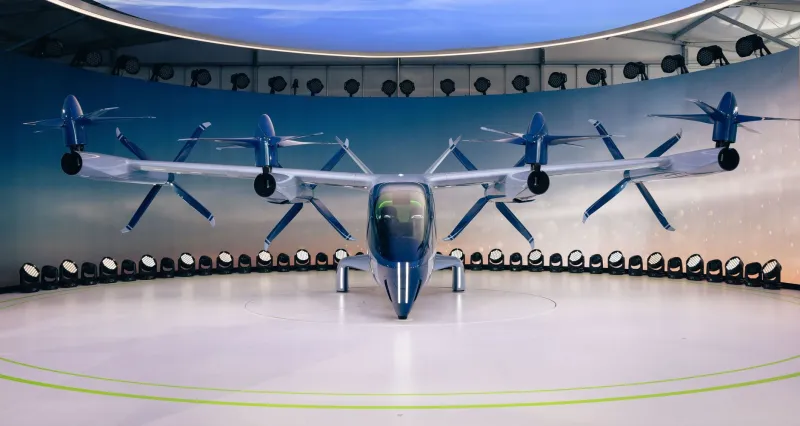
As new-generation aircraft like the Boeing 777X and next-evolution variants of Airbus platforms enter service with natively higher sensor densities, the data foundation for predictive analytics will improve substantially. And as the urban air mobility sector matures — bringing with it electric propulsion systems, novel rotor configurations, and entirely new failure modes — predictive maintenance will be less an add-on capability than a core design requirement.
The shift from reactive to predictive is not simply a maintenance story. It is a story about what becomes possible when engineering systems are designed from the outset to tell us what they need, rather than waiting for us to discover what went wrong.