Low-Altitude Laboratories: How Urban Flight Testing Is Quietly Building the Foundation for Tomorrow's Air Taxis
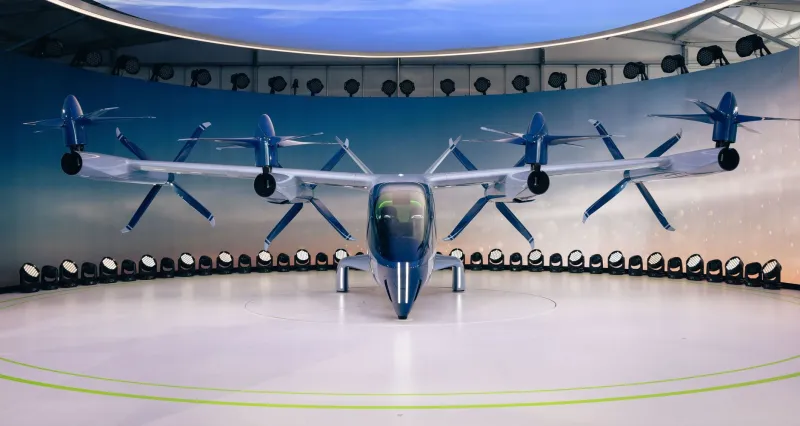
The skyline above a Marina del Rey parking structure looks unremarkable on most mornings. But on select days, a multi-rotor prototype rises methodically above the asphalt, hovers for precisely timed intervals, and descends — all while transmitting a continuous stream of sensor data to engineers hunched over laptops nearby. No fanfare, no crowds. Just methodical science at the frontier of urban aviation.
This kind of low-profile, incremental testing has become the defining methodology of the electric vertical takeoff and landing (eVTOL) industry. Far from the sweeping visions of gleaming skyports and on-demand aerial commutes, the actual work of making urban air mobility real is happening in unglamorous locations: repurposed industrial sites, FAA-designated low-altitude corridors, and controlled airspace patches carved out through painstaking negotiation with local and federal authorities. The results, however, are anything but mundane.
The Regulatory Landscape: Flying Between the Lines
For any aerospace company operating in the United States, the Federal Aviation Administration is the ever-present arbiter of what is permissible, and the eVTOL sector is no exception. The FAA's evolving framework for Advanced Air Mobility (AAM) has created both opportunity and constraint. Under Part 107 and emerging Part 135 certifications, companies are permitted to conduct unmanned and, in some cases, crewed test flights within defined parameters — provided they secure the appropriate waivers and coordinate with local air traffic control.
Joby Aviation, headquartered in Santa Cruz, California, has become one of the most visible navigators of this regulatory terrain. The company has accumulated more than 1,000 test flights and received an FAA Part 135 air carrier certificate — a milestone that places it among a rare cohort of eVTOL developers with a credible path to commercial operations. Joby's approach has been methodical: build regulatory trust through transparency, share safety data proactively, and engage FAA working groups rather than waiting for top-down mandates.
The challenge is that existing certification frameworks were written for conventional fixed-wing aircraft and rotorcraft. An aircraft that transitions between vertical lift and forward flight, powered entirely by distributed electric motors, does not fit neatly into legacy categories. The FAA's Special Federal Aviation Regulation (SFAR) process has been one mechanism for addressing novel configurations, but industry observers note that the pace of regulatory adaptation has not always kept stride with technological development.
What Urban Testing Actually Looks Like
Beyond regulatory paperwork, the practical reality of urban flight testing demands extraordinary logistical coordination. Companies must identify airspace that is sufficiently isolated from commercial flight paths, negotiate with property owners, brief local emergency services, and establish real-time communication with FAA facilities — often all for a test window measured in hours.
Archer Aviation, based in San Jose, has conducted early-stage flight demonstrations at sites across California, using these exercises not only to validate airframe performance but to stress-test the operational procedures that will eventually govern commercial service. Each flight generates gigabytes of telemetry: rotor RPM, battery thermal profiles, redundant sensor cross-checks, and atmospheric micro-data that informs both vehicle design and future route planning.
This data-centric philosophy is central to the industry's approach. Unlike traditional aviation programs that relied heavily on simulation and wind tunnel work before committing to flight hardware, modern eVTOL developers leverage digital twin environments — computational models continuously updated with real-world flight data — to compress development timelines. The feedback loop between physical testing and virtual modeling has become one of the sector's most powerful engineering tools.
Germany-based Lilium, which has maintained a significant US operational presence and investor base, has employed a similar strategy with its jet-powered eVTOL design. Lilium's approach uses electric ducted fans rather than open rotors, a configuration that offers noise and safety advantages in dense urban environments but introduces unique aerodynamic challenges during the transition from hover to cruise. Their testing regimen has focused heavily on characterizing this transition envelope — the flight phase most critical to both passenger safety and certification approval.
Infrastructure: The Invisible Half of the Equation
Much of the public discourse around urban air mobility centers on the aircraft themselves, but industry engineers are equally focused on the ground infrastructure required to support commercial operations. Vertiports — the specialized landing and charging facilities that will serve as the nodes of any urban air network — represent a significant capital and planning challenge.
In the United States, cities including Los Angeles, Dallas-Fort Worth, and Miami have emerged as early targets for vertiport development, driven by a combination of population density, traffic congestion, and relatively favorable regulatory environments. The Urban Air Mobility Coalition and various municipal planning bodies have begun incorporating vertiport siting into long-range transportation master plans, though actual construction remains limited.
Charging infrastructure presents its own engineering complexity. High-capacity battery packs must be recharged rapidly enough to support commercially viable turnaround times — ideally under ten minutes for short-haul urban routes. Current battery energy density, while improving steadily, remains a constraining factor. Several companies are exploring battery-swapping architectures as an interim solution, though standardization across platforms has yet to emerge.
Noise, often underestimated in early AAM discussions, has also proven to be a critical infrastructure and community acceptance variable. Testing in urban environments has provided invaluable acoustic data, revealing that the psychoacoustic profile of multi-rotor aircraft — the tonal quality of the sound, not just its decibel level — significantly influences community perception. Engineers are now designing rotor geometries and motor control algorithms specifically to minimize tonal noise signatures, even when overall sound levels fall within acceptable limits.
Safety as a Design Imperative
No discussion of urban air mobility is complete without a rigorous examination of safety. The prospect of electric aircraft operating at low altitudes over populated areas raises legitimate questions about failure modes, emergency procedures, and the reliability standards necessary to earn public trust.
The eVTOL industry has largely embraced a design philosophy centered on redundancy. Distributed electric propulsion — using many smaller motors rather than one or two large engines — means that the failure of any single motor does not necessarily compromise flight. Battery systems are similarly architected with multiple independent packs, and flight control software incorporates fault-detection algorithms capable of reconfiguring the aircraft's power distribution in real time.
The FAA's proposed airworthiness criteria for powered-lift aircraft establish quantitative safety targets, including a maximum catastrophic failure rate measured in flight hours. Meeting these targets through a combination of hardware reliability and software safeguards is one of the central engineering challenges the industry is working to solve through precisely the kind of incremental urban testing described above.
The Road Ahead
The gap between a prototype rising above a California parking lot and a fully certified, revenue-generating air taxi service remains substantial. Certification timelines have slipped for multiple developers, and the capital intensity of bringing a new aircraft category to market has tested investor patience across the sector.
Yet the foundational work being done in low-altitude urban test environments is genuine and consequential. Every flight hour accumulated, every edge case documented, and every regulatory relationship cultivated brings the industry measurably closer to the moment when urban air mobility transitions from aspiration to infrastructure. The rooftop tests happening quietly across American cities today are, in a very real sense, the Wright Brothers' Kitty Hawk for the next century of flight — unglamorous, iterative, and absolutely essential.