Beyond the Radar Horizon: How Autonomous Collision Avoidance Is Redefining Urban Airspace
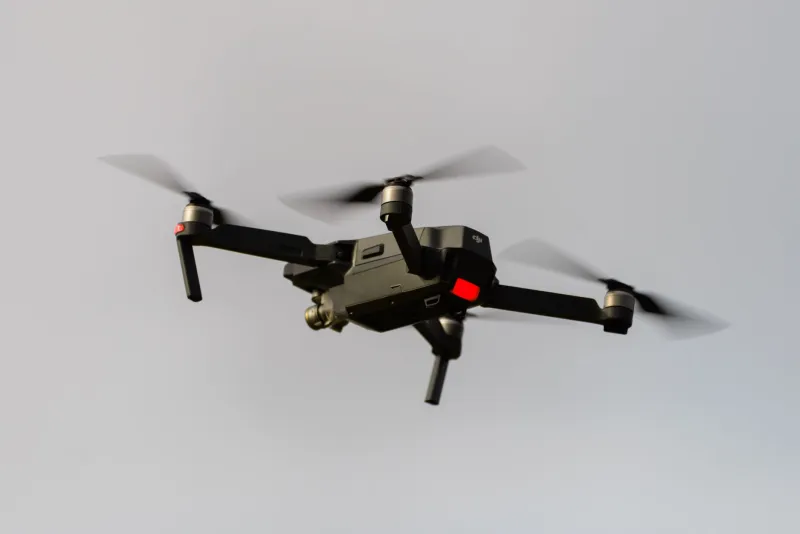
For the better part of a century, keeping aircraft separated in American skies has been the domain of human controllers, ground-based radar infrastructure, and procedural rules refined through hard-won experience. That framework has delivered an extraordinary safety record for commercial aviation. But it was designed for a world where the number of airborne vehicles over any given city could be counted on two hands. That world is ending.
The convergence of electric vertical takeoff and landing (eVTOL) vehicles, commercial drone delivery networks, and remotely piloted aircraft is creating a fundamentally different density problem — one that ground controllers and legacy transponder systems are structurally ill-equipped to solve. What is emerging in their place is a distributed, software-defined approach to airspace deconfliction, built on artificial intelligence and real-time data fusion, that may ultimately prove more capable than anything that came before it.
The Density Problem No One Fully Anticipated
The FAA's Low Altitude Authorization and Notification Capability (LAANC) system, introduced in 2018, was a meaningful first step toward automating airspace access below 400 feet. But LAANC was designed for a relatively sparse environment — a handful of drone operators seeking clearance over a metropolitan area, not hundreds of autonomous vehicles simultaneously navigating the corridors between downtown towers.
Industry projections suggest that mature urban air mobility markets in cities like Los Angeles, Dallas, and Miami could eventually support thousands of daily eVTOL flights operating below 3,000 feet. At that density, the latency inherent in human-mediated air traffic control becomes not just inefficient but genuinely dangerous. A controller managing dozens of fast-moving autonomous vehicles through a three-dimensional corridor network faces a cognitive load that no staffing model can realistically accommodate.
This is the core argument for AI-driven collision avoidance: not that machines are better pilots, but that the sheer computational scale of future low-altitude traffic management exceeds human capacity by orders of magnitude.
How the Systems Actually Work
Modern autonomous collision avoidance architectures generally operate across two distinct layers. The first is strategic deconfliction — route planning and scheduling that prevents conflicts before they arise, analogous to the way flight plans are filed and coordinated in traditional aviation. The second is tactical separation, the real-time response layer that intervenes when unexpected conflicts emerge in flight.
Companies including Xwing, Joby Aviation, and Wisk Aero are each developing proprietary approaches, but most converge on a similar computational foundation: sensor fusion drawing from onboard lidar, radar, optical cameras, and ADS-B receivers, processed through machine learning models trained to classify objects, predict trajectories, and generate avoidance maneuvers within milliseconds.
The challenge is not simply speed. It is the combinatorial complexity of simultaneous multi-vehicle interactions. A single aircraft avoiding a conflict is a tractable problem. Dozens of aircraft simultaneously adjusting trajectories in a shared corridor — each adjustment potentially creating new conflicts downstream — is a problem that requires probabilistic modeling at a scale that conventional rule-based software cannot handle gracefully. Neural network architectures, particularly those trained through reinforcement learning in simulated high-density environments, have demonstrated substantially better performance on these cascading deconfliction scenarios.
NASA's Air Traffic Management — eXploration (ATM-X) project has been one of the most rigorous public-sector efforts to stress-test these systems. Simulation campaigns conducted at NASA Ames have modeled urban corridors with hundreds of simultaneous vehicle interactions, probing the failure modes of both centralized and distributed control architectures. The findings have consistently pointed toward hybrid models — where a central traffic management service handles strategic coordination while individual vehicles retain autonomous authority over tactical separation — as the most resilient configuration.
The Regulatory Architecture Taking Shape
The FAA's ongoing development of the Urban Air Mobility Ecosystem Working Group recommendations and the broader UAS Traffic Management (UTM) framework reflects a recognition that the agency cannot simply extend existing Part 91 or Part 135 rules into the low-altitude urban environment. The airspace below 400 feet has historically been treated as relatively unstructured, governed more by avoidance obligations than positive separation standards. That will need to change.
What is emerging is a performance-based regulatory model, where certification hinges not on specific technologies but on demonstrated safety outcomes — acceptable collision probability rates, response latency thresholds, and redundancy requirements. This approach mirrors the philosophy behind the FAA's Part 23 rewrite for general aviation certification and offers manufacturers considerably more design flexibility than prescriptive hardware mandates would allow.
The BEYOND program, a coalition of drone operators conducting extended beyond visual line of sight (BVLOS) operations across multiple US states, has provided some of the most operationally realistic data informing these standards. Participants including UPS Flight Forward and Wing Aviation have accumulated tens of thousands of flight hours under waivers that require onboard detect-and-avoid capability, generating safety datasets that regulators are actively incorporating into rulemaking.
Infrastructure at the Edge
One underappreciated dimension of this transition is the role of ground-based infrastructure — or more precisely, the deliberate effort to minimize dependence on it. Traditional air traffic management assumes robust communication links between aircraft and ground facilities. In dense urban environments, that assumption is fragile. Buildings attenuate signals. Radio frequency congestion compounds with vehicle density. A system that fails when connectivity degrades is a system that will eventually fail at the worst possible moment.
The most promising autonomous collision avoidance architectures are therefore designed to be self-sufficient at the vehicle level, treating ground-based services as a performance enhancer rather than a safety dependency. Onboard processing capability has advanced sufficiently — driven in large part by the automotive industry's investment in edge AI hardware — that real-time sensor fusion and trajectory optimization no longer require offloading computation to the cloud.
This architectural choice has significant implications for the economics of airspace management. It distributes the safety burden across the vehicle fleet rather than concentrating it in expensive ground infrastructure, which may ultimately accelerate deployment timelines in secondary markets where building out new ground systems would be cost-prohibitive.
A Different Kind of Air Traffic Control
What is taking shape is not the replacement of air traffic control so much as its reinvention. The controllers and procedures that govern commercial aviation above 18,000 feet are not going away. But in the contested airspace below the cloud ceiling over America's cities, a new paradigm is asserting itself — one where safety is an emergent property of intelligent, cooperative vehicle networks rather than a function centrally administered from a facility on the ground.
The transition will not be seamless. Integrating autonomous low-altitude operations with the legacy airspace structure, ensuring that eVTOL corridors do not compromise approaches to major airports, and building public confidence in systems that cannot be easily observed or understood by passengers will each present genuine challenges.
But the trajectory is clear. The computational tools exist. The regulatory will, however cautious, is present. And the economic pressure from operators, manufacturers, and municipalities eager to realize the promised benefits of urban air mobility is substantial. The silent revolution in how America manages its airspace is already underway — and its consequences will be felt well beyond the city limits where it begins.