Slow Is Smooth: The Case Against Racing to Orbit
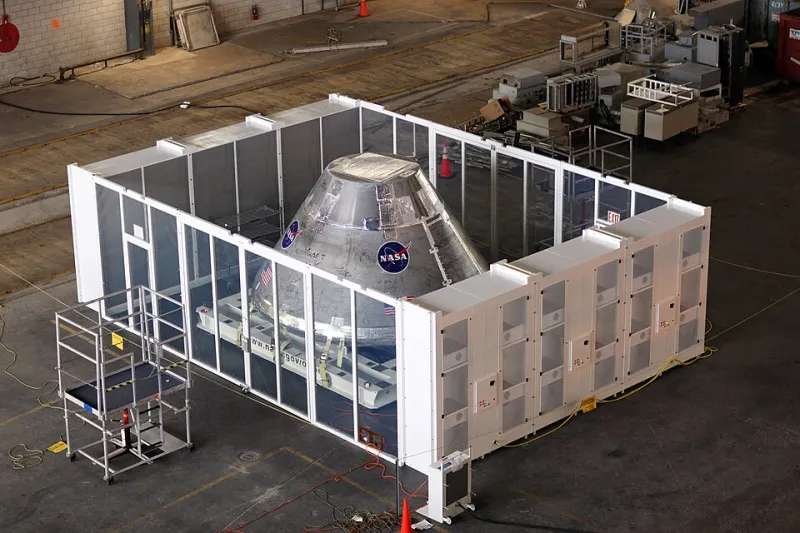
Photo: NASA/Dmitri Gerondidakis, Public domain, via Wikimedia Commons
Silicon Valley exported a doctrine to the space industry: move fast, break things, iterate. In software, the cost of a broken release is a rollback. In orbital mechanics, the cost is a hundred-million-dollar spacecraft tumbling uselessly in a decaying orbit — or worse, debris in a regime that cannot be cleaned up. It is time to make the unfashionable argument that the race to orbit is producing exactly the wrong incentives, and that slowness, deliberately chosen, is a competitive strategy.
The Failure Rate Nobody Quotes in Pitch Decks
Launch cadence has never been higher, and neither has the volume of hardware arriving in orbit that never works as advertised. New satellite constellations have suffered mass deorbiting events. Deep-space missions from well-funded startups have fallen silent within weeks of deployment. These are not aberrations; they are the predictable output of compressed development cycles, unflown designs, and supply chains assembled for cost rather than reliability.
The industry's defenders note that aerospace always tolerated failure. True — but early aircraft and early rockets were flown by test pilots and range safety officers, with failure treated as data. Today's failures often carry paying customers' payloads, insured or not, and each one feeds a regulatory apparatus that grows more cautious with every incident.
The Regulatory Reckoning
Here is the irony the move-fast crowd misses: speed is generating its own headwinds. A cascade of on-orbit failures, debris-generating breakups, and unresolved conjunctions is drawing attention from the FCC, the FAA, and Congress. The likeliest outcome is not deregulation but a tightening of licensing, insurance, and debris-mitigation requirements — rules that will favor companies with proven hardware and punish those who treated orbit as a beta environment. The fastest way to slow the space economy down is to keep breaking things in it.
What Methodical Programs Get Right
Consider the programs with the longest operational legacies. The most reliable vehicles in history — the workhorses that flew for decades — were built by organizations that tested exhaustively before first flight and iterated slowly after it. That discipline looks antiquated next to a startup shipping software-defined satellites on eighteen-month cycles. But in orbit, there is no patch deployment when the thermal design is wrong, and no customer support line at 500 kilometers.
Methodical does not mean timid. The right model is rigorous early, aggressive late: fly qualification articles, test to margins, then scale cadence on a proven design. That is how you get both reliability and volume.
The Long Game
The space economy will not be won by whoever reaches orbit soonest with the most hardware. It will be won by whoever builds systems that still work in year five, insures cheaply, satisfies regulators without friction, and earns the trust of customers whose businesses depend on uptime. Slower programs compound advantages the sprinters cannot see until it is too late. In flight, as any test pilot will tell you: slow is smooth, and smooth is fast.