Burning Through the Limits: How Materials Science Will Decide the Fate of Next-Generation Fighter Engines

Photo by Photo by Angel Sinigersky on Unsplash on Unsplash
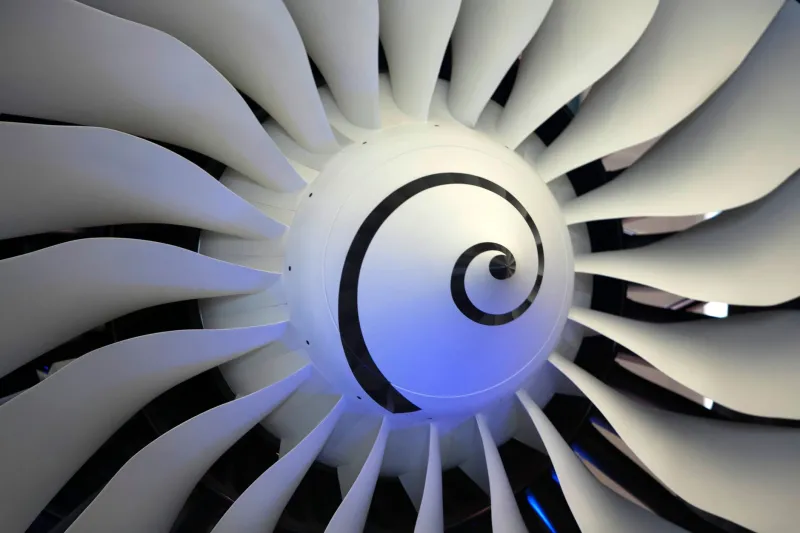
The turbine section of a modern military jet engine operates in conditions that would reduce most engineering materials to slag. Temperatures routinely exceed the melting point of the nickel alloys surrounding them — a paradox sustained only through elaborate internal cooling architectures and thermal barrier coatings that push the boundaries of what manufacturing can reliably produce. As the Pentagon and its prime contractors push toward sixth-generation fighter platforms and sustained hypersonic flight, that paradox is becoming a crisis.
The core issue is straightforward in principle and enormously complex in practice: engine designs are outrunning the materials available to build them.
The Temperature Problem, Quantified
Current turbine inlet temperatures in high-performance military engines already approach 3,000 degrees Fahrenheit. The metallic alloys used in turbine blades — predominantly nickel-based superalloys with precisely engineered single-crystal microstructures — begin to lose structural integrity well below that threshold. The gap is bridged through a combination of film cooling, where compressed air is bled through microscopic channels in the blade surface, and ceramic thermal barrier coatings that insulate the metal substrate from direct combustion gas exposure.
Those engineering workarounds are effective, but they carry a cost. Every pound of cooling air diverted from the combustion cycle is thrust that never reaches the nozzle. Every additional coating layer introduces potential failure modes — delamination, oxidation, foreign object damage — that maintenance crews must anticipate and manage. As design teams target higher thrust-to-weight ratios and greater thermal efficiency for programs like the Next Generation Air Dominance initiative, the margins available for these compensatory measures are shrinking.
The result is a materials gap that no amount of clever cooling geometry can permanently close.
Ceramic Matrix Composites: Promise and Production Reality
The aerospace industry has long recognized ceramic matrix composites — commonly abbreviated as CMCs — as the most credible path beyond metallic superalloys. Silicon carbide fiber embedded in a silicon carbide matrix offers a density roughly one-third that of nickel superalloys while retaining structural integrity at temperatures several hundred degrees higher. For engine designers, those numbers represent a transformative opportunity: lighter rotating components, reduced cooling requirements, and thermal efficiency gains that translate directly into range and combat persistence.
GE Aerospace has deployed CMC components in the high-pressure turbine shrouds of its LEAP commercial engine family, and the technology has migrated into military applications through the F414 and related platforms. But the transition from demonstrator hardware to production-rate components has exposed the gap between materials science ambition and manufacturing reality.
CMC fabrication is time-intensive and technically demanding. The chemical vapor infiltration processes used to densify the ceramic matrix require extended cycle times measured in weeks, not hours. Fiber architecture must be precisely controlled to manage anisotropic mechanical properties. Inspection methods capable of detecting internal defects without destroying the part are still maturing. And the domestic supplier base capable of producing aerospace-grade silicon carbide fiber — a prerequisite for the entire process — remains concentrated in a small number of facilities.
The Air Force Research Laboratory and the Department of Defense's industrial base offices have flagged the SiC fiber supply chain as a strategic vulnerability. Much of the precursor material and processing expertise that underpins global production has historically resided outside the United States, a dependency that looks increasingly uncomfortable in the current geopolitical environment.
Refractory High-Entropy Alloys and the Search for Alternatives
While CMCs attract the most attention in aerospace materials discussions, a parallel research track is investigating whether metallic alloys themselves can be pushed further through compositional innovation. High-entropy alloys — materials containing five or more principal elements in roughly equiatomic proportions — have demonstrated mechanical properties in laboratory settings that challenge conventional assumptions about the temperature ceiling for metallic systems.
Refractory variants, incorporating elements such as tungsten, molybdenum, niobium, and tantalum, have shown oxidation resistance and creep strength at temperatures that would be prohibitive for conventional superalloys. DARPA has funded several programs exploring refractory high-entropy alloys for hypersonic propulsion applications, and university research groups at institutions including MIT, Georgia Tech, and the University of California system have published promising characterization data.
The challenge, as with CMCs, is translating laboratory results into manufacturable components. Refractory alloys are difficult to process — many require powder metallurgy routes or specialized casting techniques — and their behavior under the complex multiaxial stress states present in rotating turbine hardware is not yet fully characterized. The qualification pathway for a new turbine material in a military engine is measured in years and hundreds of millions of dollars, a timeline that does not align neatly with the urgency of current procurement schedules.
The Coating Layer Nobody Talks About
Beneath the headline materials, a quieter but equally consequential competition is unfolding in thermal and environmental barrier coatings. Current yttria-stabilized zirconia thermal barrier coatings have served the industry well for decades, but their maximum use temperatures are approaching practical limits, and they offer limited resistance to calcium-magnesium-alumino-silicate deposits — the glassy compounds formed when engines ingest airborne dust and particulates that are particularly prevalent in desert operating environments.
Next-generation coating systems based on rare-earth zirconates, hafnates, and pyrochlore-structured oxides offer improved temperature capability and CMAS resistance, but their adoption requires requalification of deposition processes, substrate bond coats, and inspection protocols across the entire engine supply chain. The interaction between novel coating chemistries and CMC substrates introduces additional complexity, since the thermal expansion mismatch between coating and substrate must be managed to prevent spallation under thermal cycling.
For engine original equipment manufacturers and their Tier 1 suppliers, the coating transition represents a significant engineering and capital investment at precisely the moment when program schedules are under pressure.
Supply Chain Concentration and Strategic Risk
The materials challenge cannot be separated from the industrial base question. Single-crystal superalloy casting requires specialized vacuum investment casting facilities that represent decades of accumulated process knowledge. The number of domestic foundries capable of producing flight-qualified single-crystal turbine blades is small, and capacity expansions require long lead times for capital equipment procurement and workforce development.
CMC production faces analogous constraints. The specialized chemical vapor deposition reactors used in CMC densification are not off-the-shelf items, and the technicians qualified to operate them represent a workforce pipeline that the industry has not yet built to the scale that next-generation programs will require.
The Biden and Trump administrations have both identified advanced materials and manufacturing as priorities for domestic industrial base investment, with funding flowing through the CHIPS and Science Act framework and targeted Defense Production Act authorities. Whether those investments translate into production capacity on a timeline relevant to sixth-generation fighter development remains an open question.
The Materials Bet That Aviation Cannot Afford to Lose
The history of aerospace is, in significant measure, a history of materials breakthroughs enabling performance that would otherwise have been physically impossible. The development of directionally solidified and single-crystal turbine blades in the 1960s and 1970s unlocked engine performance that sustained American air superiority for half a century. The next equivalent breakthrough — whether through CMC maturation, high-entropy alloy development, or some combination of approaches not yet fully characterized — will be equally consequential.
What is different today is the urgency. The competitive environment facing US aerospace and defense programs does not afford the luxury of extended development timelines. The materials science community, the defense acquisition system, and American industry will need to compress qualification cycles, expand domestic production capacity, and solve manufacturing challenges simultaneously rather than sequentially.
The engines of the next generation of American fighter aircraft are, in a meaningful sense, already being designed. Whether the materials to build them will be ready in time is a question that deserves far more attention than it currently receives.